One of my kids recently asked me if “cussing” is really that wrong. The common argument is that curse words are just man-made words deemed inappropriate, but at the end of the day, they are “just words”. Who gets to say those specific words are “wrong”?
Just this morning, I watched a video of Danish lawmaker Anders Vistisen using the “f” word towards President Trump concerning Greenland. Vistisen was interrupted and reprimanded for using foul language, regardless of his political views, and was informed that it would not be tolerated.
I’ve also heard a judge interrupt a courtroom proceeding over foul language. He told the offender that there would be no foul language permitted in his courtroom.
And just last weekend, while watching a San Antonio Spurs game on TV, I heard the announcer come over the loudspeaker and tell thousands of fans that foul language would not be tolerated in the arena and could result in ejection from the game.
The FCC still regulates broadcast TV & radio. Swear words are “not allowed anytime if obscene, and restricted to late-night hours if indecent/profane.”
Even the world has rules about swearing, though admittedly, these rules have gotten looser and looser as we’ve digressed as a society. Yet still, whether broken or abided by, the rules are still there.
I’ve brought these scenarios up to my child as examples of even the world marking certain words as something they need to bleep over or avoid altogether.
So why are we as Christians so flippant with our word choices?
Why do we spend time arguing that words are “just words”?
Old habits die hard. None of us is innocent of keeping our speech perfect at all times. We’ve all said things in anger and regretted them later. And for many, growing up in cultures where curse words are used as naturally as an “umm”, it can be nearly impossible to remove these words from our minds and our mouths.
Ultimately, despite how hard it can be, God’s Word reminds us many times that words matter.
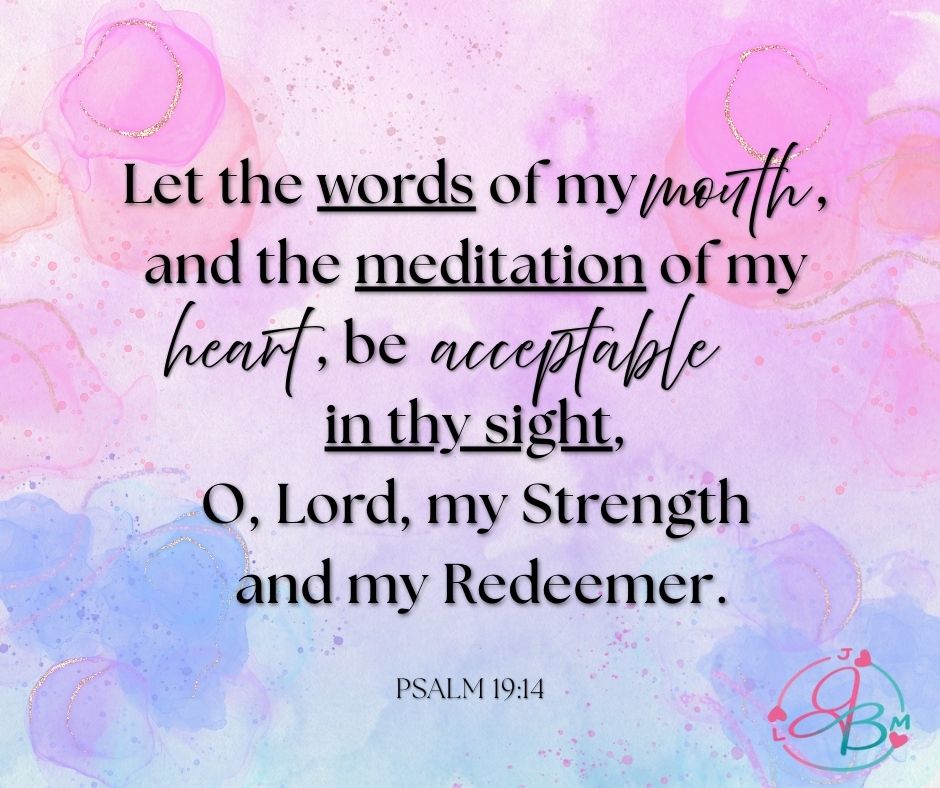
“Let the words of my mouth, and the meditation of my heart, be acceptable in thy sight, O, Lord, my Strength and my Redeemer” (Psalm 19:14).
“For by thy words thou shalt be justified, and by thy words thou shalt be condemned” (Matthew 12:36-37).
“Be not rash with thy mouth, and let not thine heart be hasty to utter any thing before God… therefore let thy words be few” (Ecclesiastes 5:2).
“Neither filthiness, nor foolish talking, nor jesting, which are not convenient: but rather giving of thanks” (Ecclesiastes 5:4).
“Set a watch, O LORD, before my mouth; keep the door of my lips” (Psalm 141:3).
“But I say unto you, That every idle word that men shall speak, they shall give account thereof in the day of judgment” (Matthew 12:36).
Chat GPT says, “The Greek word translated ‘idle’ means:
- Useless
- Careless
- Unproductive
- Empty of good purpose
So, an idle word is not merely “small talk” — it is speech that serves no righteous, edifying, or necessary purpose.”
Much of the world’s broadcasts, businesses, courtrooms, arenas, etc., all have rules against foul language. The principles of the Bible clearly speak out against any useless words, or words that tear down, or words spoken in haste or anger. Yet Christians are so often the ones justifying it. “Well…does the Bible REALLY say it’s wrong?”
I think we should stop making excuses. We should give each other grace, of course, because most of us have created lifelong habits of using unedifying words – whether swear words or just words that tear down – and it will take a lot of dedication and intentionality to change those habits.
Regardless of any excuses we afford ourselves, we must ask, “Are the words that I allow into my heart and mind – and ultimately out of my lips – edifying words that build others up and bring glory to Jesus?”
“Lord, let my words be few. But when I speak, let it honor You!”
Would love to know your thoughts. Do you struggle with swearing? Do you think the Bible is clear that swearing is something Christians should avoid or do you have a different opinion on the matter?
 Just a Mom’s View